Buy seopark.eu ?
We are moving the project
seopark.eu .
Are you interested in purchasing the domain
seopark.eu ?
domain@kv-gmbh.de · 0541-91531010
Buy seopark.eu ?
What are unknowns?
Unknowns are variables or values that are not yet determined or specified in a given problem or equation. They are the quantities that we are trying to find or solve for. In algebra, unknowns are typically represented by letters such as x, y, or z, and the goal is to determine their values through solving equations or systems of equations. Unknowns are a fundamental concept in mathematics and are essential for problem-solving and finding solutions to various mathematical problems. **
How does vector calculation with unknowns work?
Vector calculation with unknowns involves performing operations on vectors that contain variables instead of specific numerical values. This allows for the manipulation of vectors in a general form, without needing to know the exact values of the variables. The operations involved in vector calculation with unknowns are similar to those used with numerical values, including addition, subtraction, scalar multiplication, and dot product. The resulting expressions can then be used to solve for the unknown variables or to analyze the properties of the vectors in a more general context. **


Similar search terms for Unknowns
Top-Angebote
Products related to Unknowns:
-
TP-LINK M7010 4G LTE Mobile WiFi BlackA portable 4G LTE mobile WiFi hotspot that converts cellular signal into WiFi for up to 10 devices simultaneously. Supporting data speeds up to 300 Mbps on 2.4 GHz single-band, it features a 2000 mAh battery delivering 8 hours of connectivity on a single charge. The compact 50g design includes all necessary cables and accessories for immediate use.69,99 £*Shipping: 0,00 £Secure redirect to the provider
-
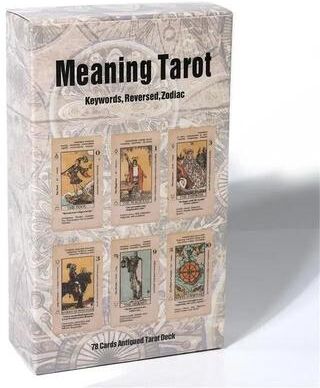
Uplifted Finds Beginner Tarot Deck With Keywords & Meanings Antiqued Learning Tarot 78 Card Set Beginner Tarot Deck With Keywords & Meanings Antiqued Learning Tarot 78 Card SetCommand ultimate spiritual confidence with the Beginner Learning Tarot System, a highperformance metaphysical solution specifically engineered to act as a comprehensive tool for elite organization and superior technical ergonomics. Built with a...44,97 $*Shipping: 0,00 $Secure redirect to the provider
-
GlowBake Advanced Skin Tester, Face Skin Moisture & Oil Content Analyzer Advanced Skin Tester, Face Skin Moisture & Oil Content AnalyzerDiscover your skins true condition with our advanced Skin Tester a compact yet powerful face skin analyzer designed to measure moisture, oil content, skin water, cheek elastic quality, and even estimate skin age in seconds. Ideal for home use or pro...27,97 $*Shipping: 0,00 $Secure redirect to the provider
-
Uplift Picks Traffic Light And Pedestrian Signal Refrigerator Magnet traffic LightGive your space a playful cityinspired accent with this traffic light refrigerator magnet. Designed like a miniature traffic signal or pedestrian light, it brings character to refrigerators, lockers, cabinets, and magnetic whiteboards. The compact...50,00 $*Shipping: 0,00 $Secure redirect to the provider



-
What is an equation with three unknowns?
An equation with three unknowns is a mathematical expression that contains three variables whose values are not known. It typically takes the form of ax + by + cz = d, where a, b, and c are the coefficients of the variables x, y, and z, and d is a constant. Solving an equation with three unknowns involves finding the values of x, y, and z that satisfy the equation. This can be done using various methods such as substitution, elimination, or matrix algebra. **
-
How do you solve equations with two unknowns?
To solve equations with two unknowns, you typically need two separate equations that involve the same two unknown variables. You can then use methods such as substitution or elimination to solve for the values of the unknown variables. By substituting one variable in terms of the other from one equation into the other equation, you can find the values of both unknowns. It is important to ensure that the equations are linear and independent to accurately solve for the unknown variables. **
-
What is the proportionality theorem with two unknowns?
The proportionality theorem with two unknowns states that if two ratios are equal, and one of the ratios contains two unknowns, then the other ratio must also contain two unknowns. In other words, if a/b = c/d, where a, b, c, and d are unknowns, then the proportionality theorem states that a and b are directly proportional to c and d. This theorem is used to solve problems involving proportions and can be applied in various mathematical and real-world scenarios. **
-
How can one find unknowns using ratio equations?
To find unknowns using ratio equations, one can set up a proportion using the given ratios and unknowns. For example, if the ratio of boys to girls in a class is 3:5 and the total number of students is unknown, one can set up the equation 3/5 = x/total number of students and solve for the unknown x. Similarly, if the ratio of sugar to flour in a recipe is 1:2 and the amount of flour is unknown, one can set up the equation 1/2 = sugar/flour and solve for the unknown amount of flour. By setting up and solving these ratio equations, one can find the unknowns in various situations. **


What are the leverage forces of 2 unknowns?
The leverage forces of 2 unknowns refer to the forces or factors that can be used to gain an advantage or influence the outcome of a situation when dealing with two unknown variables. In the context of problem-solving or decision-making, leverage forces could include information, resources, expertise, or strategic positioning that can be used to manipulate or control the outcome of the unknowns. By identifying and utilizing these leverage forces, individuals or organizations can increase their ability to predict, influence, or manage the impact of the unknown variables. **
How can one determine vectors with 2 unknowns?
To determine vectors with 2 unknowns, you can use the components of the vector and set up a system of equations. For example, if you have a vector v = (x, y), you can set up the equations v1 = x and v2 = y. Then, you can use additional information, such as the magnitude or direction of the vector, to solve for the unknowns. Alternatively, you can use geometric methods, such as plotting the vector on a coordinate plane and using the properties of right triangles to determine the unknowns. **
Top-Angebote
Products related to Unknowns:
-
TP-LINK M7450 Mobile HotspotPortable 4G LTE Advanced mobile hotspot supporting WiFi 5 with 1200 Mbps wireless speeds and 300 Mbps max transfer rate. Compact external device (11.2 x 6.6 x 1.6 cm) featuring 3000 mAh battery providing up to 15 hours of usage, compatible with all major operating systems.128,49 £*Shipping: 0,00 £Secure redirect to the provider
-
TP-LINK M7010 4G LTE Mobile WiFi BlackA portable 4G LTE mobile WiFi hotspot that converts cellular signal into WiFi for up to 10 devices simultaneously. Supporting data speeds up to 300 Mbps on 2.4 GHz single-band, it features a 2000 mAh battery delivering 8 hours of connectivity on a single charge. The compact 50g design includes all necessary cables and accessories for immediate use.69,99 £*Shipping: 0,00 £Secure redirect to the provider
-
Uplifted Finds Beginner Tarot Deck With Keywords & Meanings Antiqued Learning Tarot 78 Card Set Beginner Tarot Deck With Keywords & Meanings Antiqued Learning Tarot 78 Card SetCommand ultimate spiritual confidence with the Beginner Learning Tarot System, a highperformance metaphysical solution specifically engineered to act as a comprehensive tool for elite organization and superior technical ergonomics. Built with a...44,97 $*Shipping: 0,00 $Secure redirect to the provider
-
What are unknowns?
Unknowns are variables or values that are not yet determined or specified in a given problem or equation. They are the quantities that we are trying to find or solve for. In algebra, unknowns are typically represented by letters such as x, y, or z, and the goal is to determine their values through solving equations or systems of equations. Unknowns are a fundamental concept in mathematics and are essential for problem-solving and finding solutions to various mathematical problems. **
-
How does vector calculation with unknowns work?
Vector calculation with unknowns involves performing operations on vectors that contain variables instead of specific numerical values. This allows for the manipulation of vectors in a general form, without needing to know the exact values of the variables. The operations involved in vector calculation with unknowns are similar to those used with numerical values, including addition, subtraction, scalar multiplication, and dot product. The resulting expressions can then be used to solve for the unknown variables or to analyze the properties of the vectors in a more general context. **
-
What is an equation with three unknowns?
An equation with three unknowns is a mathematical expression that contains three variables whose values are not known. It typically takes the form of ax + by + cz = d, where a, b, and c are the coefficients of the variables x, y, and z, and d is a constant. Solving an equation with three unknowns involves finding the values of x, y, and z that satisfy the equation. This can be done using various methods such as substitution, elimination, or matrix algebra. **
-
How do you solve equations with two unknowns?
To solve equations with two unknowns, you typically need two separate equations that involve the same two unknown variables. You can then use methods such as substitution or elimination to solve for the values of the unknown variables. By substituting one variable in terms of the other from one equation into the other equation, you can find the values of both unknowns. It is important to ensure that the equations are linear and independent to accurately solve for the unknown variables. **
Similar search terms for Unknowns
-
GlowBake Advanced Skin Tester, Face Skin Moisture & Oil Content Analyzer Advanced Skin Tester, Face Skin Moisture & Oil Content AnalyzerDiscover your skins true condition with our advanced Skin Tester a compact yet powerful face skin analyzer designed to measure moisture, oil content, skin water, cheek elastic quality, and even estimate skin age in seconds. Ideal for home use or pro...27,97 $*Shipping: 0,00 $Secure redirect to the provider
-
Uplift Picks Traffic Light And Pedestrian Signal Refrigerator Magnet traffic LightGive your space a playful cityinspired accent with this traffic light refrigerator magnet. Designed like a miniature traffic signal or pedestrian light, it brings character to refrigerators, lockers, cabinets, and magnetic whiteboards. The compact...50,00 $*Shipping: 0,00 $Secure redirect to the provider
-
Uplifted Finds Traffic Light Magnetic Refrigerator Sticker & Creative Toy traffic LightAdd a playful, urban touch to your kitchen or workspace with our New Traffic Light Magnetic Refrigerator Sticker. Engineered with creative traffic toy styling featuring pedestrian and signal lights, this charming magnetic accessory combines fun...34,97 $*Shipping: 0,00 $Secure redirect to the provider
-
Inspire Curations Mini Traffic Light Magnetic Refrigerator Magnet Decoration traffic LightBring a playful street scene to your home with this traffic light refrigerator magnet. Designed to resemble a real pedestrian traffic signal, this creative magnet adds personality to refrigerators, lockers, whiteboards, and other magnetic surfaces....50,50 $*Shipping: 0,00 $Secure redirect to the provider
-
What is the proportionality theorem with two unknowns?
The proportionality theorem with two unknowns states that if two ratios are equal, and one of the ratios contains two unknowns, then the other ratio must also contain two unknowns. In other words, if a/b = c/d, where a, b, c, and d are unknowns, then the proportionality theorem states that a and b are directly proportional to c and d. This theorem is used to solve problems involving proportions and can be applied in various mathematical and real-world scenarios. **
-
How can one find unknowns using ratio equations?
To find unknowns using ratio equations, one can set up a proportion using the given ratios and unknowns. For example, if the ratio of boys to girls in a class is 3:5 and the total number of students is unknown, one can set up the equation 3/5 = x/total number of students and solve for the unknown x. Similarly, if the ratio of sugar to flour in a recipe is 1:2 and the amount of flour is unknown, one can set up the equation 1/2 = sugar/flour and solve for the unknown amount of flour. By setting up and solving these ratio equations, one can find the unknowns in various situations. **
-
What are the leverage forces of 2 unknowns?
The leverage forces of 2 unknowns refer to the forces or factors that can be used to gain an advantage or influence the outcome of a situation when dealing with two unknown variables. In the context of problem-solving or decision-making, leverage forces could include information, resources, expertise, or strategic positioning that can be used to manipulate or control the outcome of the unknowns. By identifying and utilizing these leverage forces, individuals or organizations can increase their ability to predict, influence, or manage the impact of the unknown variables. **
-
How can one determine vectors with 2 unknowns?
To determine vectors with 2 unknowns, you can use the components of the vector and set up a system of equations. For example, if you have a vector v = (x, y), you can set up the equations v1 = x and v2 = y. Then, you can use additional information, such as the magnitude or direction of the vector, to solve for the unknowns. Alternatively, you can use geometric methods, such as plotting the vector on a coordinate plane and using the properties of right triangles to determine the unknowns. **
* All prices are inclusive of VAT and, if applicable, plus shipping costs. The offer information is based on the details provided by the respective shop and is updated through automated processes. Real-time updates do not occur, so deviations can occur in individual cases. ** Note: Parts of this content were created by AI.